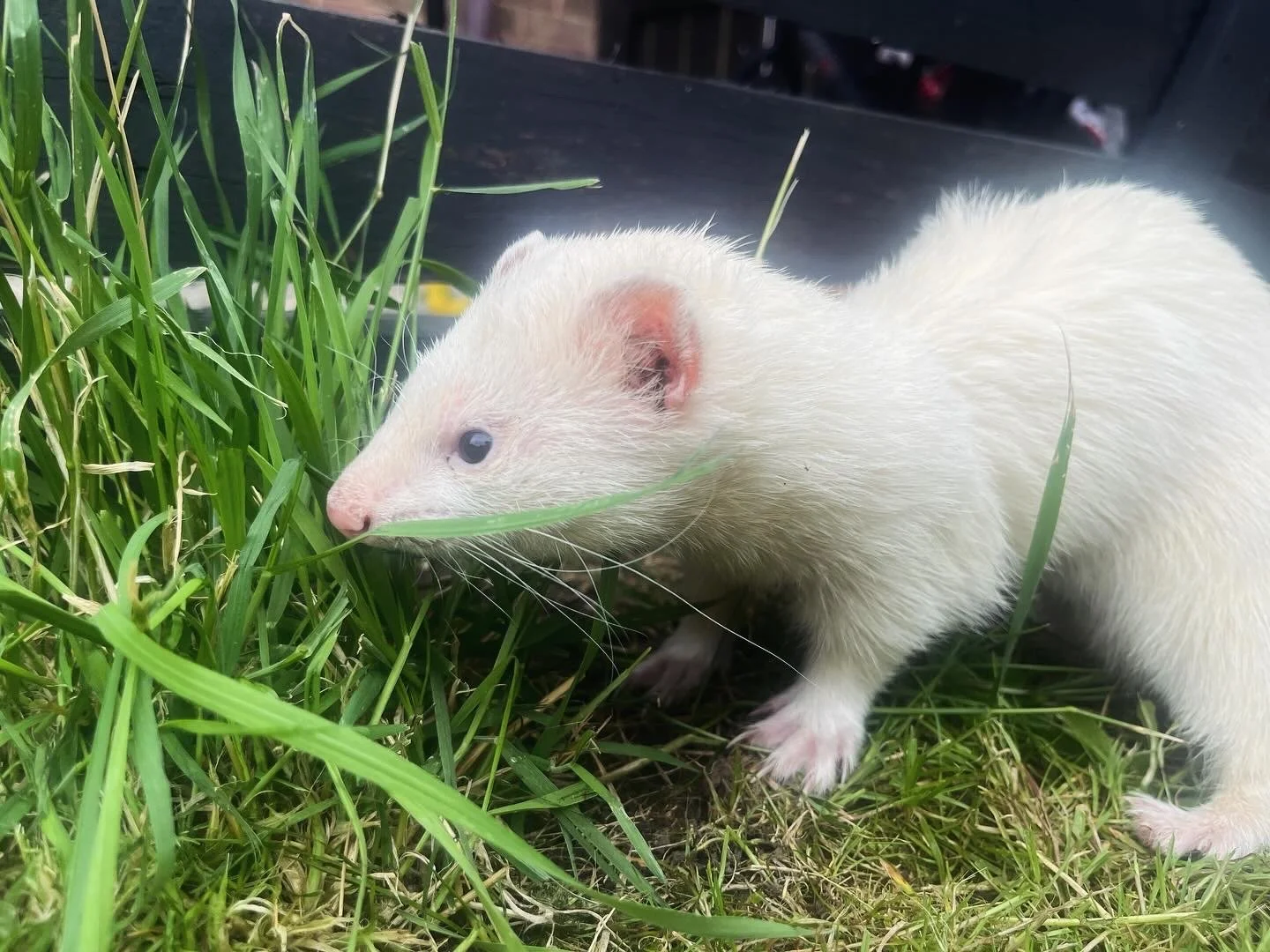
Ferret Neutering Advice.
Ferret Neutering.
Traditionally we have surgically neutered ferrets and still do. However a large percentage of neutered ferrets will develop hyperadrenocorticism in later years (although it can occur as young as 3).
The alternative is hormone implants. These are expensive and we strongly recommend (for welfare reasons) that this is done under general anaesthetic – further increasing the cost. This has to be done yearly.
It is quite acceptable to choose the surgical option – you are not being a bad ferret parent.
-
Traditionally we have surgically neutered ferrets and still do. However a large percentage of neutered ferrets will develop hyperadrenocorticism in later years (although it can occur as young as 3).
The alternative is hormone implants. These are expensive and we strongly recommend (for welfare reasons) that this is done under general anaesthetic – further increasing the cost. This has to be done yearly.
It is quite acceptable to choose the surgical option – you are not being a bad ferret parent.
-
Female ferrets are known as Jills. Neutering a female ferret is called spaying. We are in fact removing both ovaries and the uterus (womb). This is called an ovariohysterectomy in humans.
When female ferrets come into season (heat) they start bleeding and do not stop unless mated (some people have vasectomised hobbs to stop the season without a pregnancy) or given a hormone injection. If left they will bleed and become anaemic to the stage that they can die.
What are the benefits?
No unwanted pregnancies.
No bleeding, anaemia and potential death.
What are the disadvantages?
Potential to develop hyperadrenocorticism
-
Neutering of male ferrets (known as Hobbs), this is called castration. Both testicles are removed.
We can also perform vasectomies so the hobb can be used to bring Jills out of season but this does not affect the smell or the aggression.
What are the benefits?
Stops breeding.
Reduces aggression.
Significantly reduces the smell (male ferrets can smell eye-wateringly badly).
What are the disadvantages?
Potential to develop hyperadrenocorticism.
-
We perform our castrations and spays from Monday to Friday at our Preston Farm Hospital.
To book, please call the surgery on 01642 604555 or your usual surgery number.Our team will book you an appointment for a pre-op check for your dog, where you will have the opportunity to discuss the options further.